Understanding Family Expectations: What Every Mjakazi Should Know
Author
Mjakazi Admin
Date Published
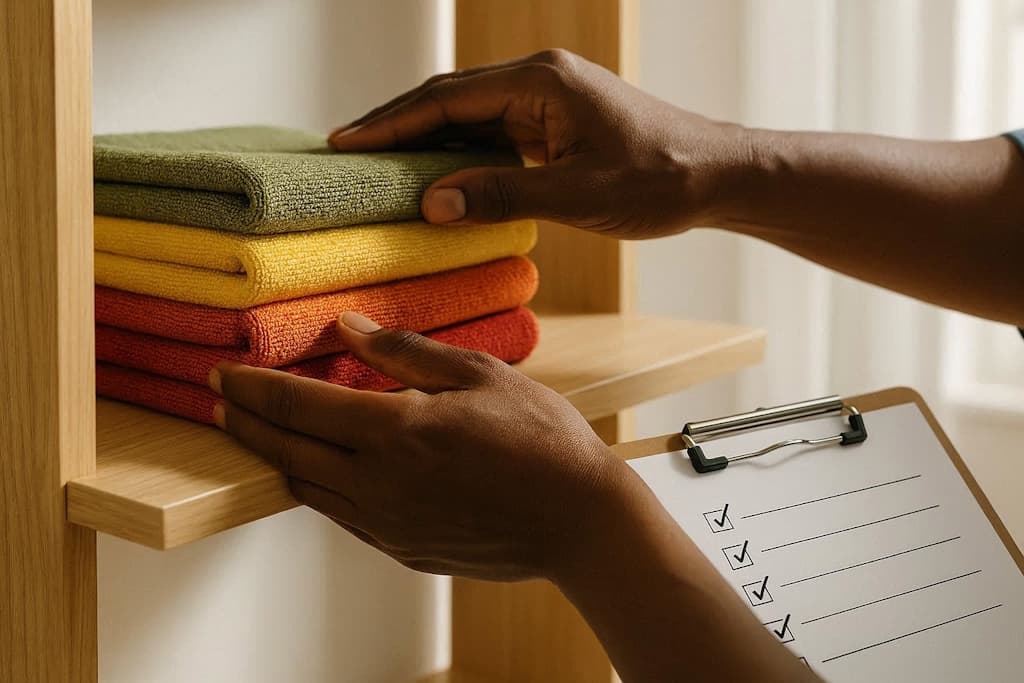
When we talk about domestic work, we often spend a lot of time discussing the physical tasks. We talk about how to clean a floor without leaving streaks, the right way to organize a pantry, or how to prep a meal that meets a family’s specific dietary needs. But as I have spent more time building systems that connect families with professional help, I have realized that the physical work is only half the story. The other half, the part that actually determines whether a relationship lasts for years or ends in a few weeks, is the understanding of expectations.
If you are a Mjakazi entering a new home, you are stepping into a space that is more than just a workplace. It is a sanctuary. For the family living there, it is the one place in the world where they should feel completely safe, relaxed, and in control. When they hire you, they aren't just looking for someone to do the laundry, they are looking for someone to help them protect that sense of peace. Understanding this fundamental truth is the key to becoming not just a helper, but an indispensable professional.
I want to share some insights from the perspective of an employer who also happens to be a systems architect. In my world, we look for clarity, consistency, and reliability. These same principles apply to the home, and understanding what a family is actually looking for can transform your career.
The Sanctuary Mindset
The first thing every professional needs to understand is that for a family, their home is their most private and vulnerable space. Every time a new person enters that space, there is a natural level of anxiety. The family is asking themselves if their children are safe, if their belongings are secure, and if their privacy will be respected.
When a family sets expectations, they are often trying to manage this anxiety. When they ask you to follow a specific routine, or they give you instructions on how to handle the front door, they aren't being "bossy" for the sake of power. They are trying to maintain the integrity of their sanctuary. As a professional, your first job is to respect that sanctuary. This means being mindful of the energy you bring into the house, respecting the privacy of closed doors, and understanding that your presence should subtract stress, not add to it.
The "Why" Behind the "How"
I often see friction arise because a worker doesn't understand why a family wants something done a certain way. For example, a parent might be very specific about how the children’s toys are sanitized. If you only see the task as "cleaning toys," you might think they are being overly picky. But if you understand the "why," that the child has a specific allergy or that the parent is deeply worried about germs, the task takes on a new level of importance.
As a professional, you should always try to look for the "why." If an instruction doesn't make sense to you, it is perfectly okay to ask, politely, for the reason behind it. Understanding the motivation helps you do the job better and shows the family that you truly care about their well-being. When you understand the "why," you can anticipate their needs. You stop being someone who just follows orders and start being someone who solves problems before they even happen.
Communication: The Professional’s Best Tool
In the world of software development, we have a saying: "Fail fast." It means that if you don't understand a requirement, or if you hit a bug, you should speak up immediately rather than wasting time guessing. The same is true in the home.
The biggest mistake a Mjakazi can make is assuming they know what is expected without asking. If you aren't sure how to use a specific appliance, ask. If you aren't sure where a certain item belongs, ask. Employers much prefer a question on day one over a broken machine or a lost item on day ten.
Furthermore, communication is about updates. A family shouldn't have to follow you around to know if the tasks are done. A simple, "The laundry is finished and the kitchen is clean, is there anything else you need before I start on the bedrooms?" goes a long way. It provides the family with "status updates" that build confidence in your ability to manage your own time. This kind of proactive communication is what separates a beginner from a seasoned professional.
The Value of Consistency
If I hire a developer to build a piece of code, I don't just want it to work today, I want it to work exactly the same way every single day. Families feel the same way about their homes. Reliability is the most valuable trait you can offer.
Expectations are often built around a rhythm. The family has a rhythm for their mornings, their meals, and their evenings. When you are consistent in your work, you become a part of that rhythm. They stop having to think about whether the dishes will be done or if the children will be ready for school on time. That "unconscious trust" is the highest level of professional achievement in domestic work.
Consistency also means showing up with the same professional attitude every day. We all have bad days, but a professional knows how to leave their personal stresses at the door so they can focus on the task at hand. When you are consistent, you become the person the family knows they can rely on, no matter what is happening in the outside world.
Taking Ownership of the Role
There is a significant difference between "doing a job" and "owning a role." Someone who is just doing a job waits to be told what to do. Someone who owns their role looks at the house and sees what needs to be done.
If you see that the milk is running low, don't just wait for the employer to notice. Tell them. If you see that a lightbulb has burned out, bring it to their attention. Taking ownership means you are looking out for the household’s interests. It shows that you are invested in the success of the home.
When you take ownership, you are essentially telling the family, "I’ve got this." That phrase is the most beautiful thing an employer can hear. It allows them to let go of the mental load of managing the house, which is often the very reason they hired you in the first place.
The Dignity of the Profession
I want to be very clear about one thing, understanding expectations and being professional is not about "servitude." It is about skill and dignity. Domestic work is the engine that allows society to function. Without people like you, doctors couldn't go to hospitals, teachers couldn't go to schools, and founders like me couldn't build businesses.
When you insist on clear expectations and professional standards, you are raising the bar for the entire industry. You are asserting that your work has value and that you deserve to be treated with respect. A family that has high expectations for you should also have high expectations for how they treat you.
This mutual respect is the foundation of a healthy workplace. You are providing a high level service, and in return, you should receive fair compensation, a safe environment, and the dignity that comes with being a professional.
Bridging the Gap with Mjakazi Connect
I know that navigating these expectations can be difficult, especially when you are starting in a new home. Sometimes families don't know how to communicate what they want, and sometimes you might feel like you are walking on eggshells trying to figure it all out.
This is why we created Mjakazi Connect.
We didn't just want to make it easier for families to find help, we wanted to make it easier for professionals like you to find the right families. We work with both sides to ensure that expectations are clear from the very beginning. We provide a platform where your skills, your history, and your professional standards are recognized and valued.
When you join our community, you aren't just looking for a job, you are entering a system that respects your craft. We help facilitate those early conversations about roles and responsibilities so that there are no surprises later on. We believe that by professionalizing the domestic sector, we can create better outcomes for everyone. We want you to go into a home feeling confident, prepared, and respected.
Final Thoughts for the Professional
To every Mjakazi reading this, remember that your work matters. You are the silent architect of the homes you serve. By understanding the psychology of the families you work for, by communicating clearly, and by taking ownership of your role, you are building a career that is rooted in trust and excellence.
The families who use our services aren't just looking for a pair of hands, they are looking for a partner. They want someone who understands the value of their sanctuary and who is committed to helping them maintain it. When you meet those expectations with professionalism and care, you don't just have a job, you have a vital role in a family’s story.
It is a journey of mutual growth. As you learn the needs of the family, they also learn to rely on and value your expertise. Together, you create a home that is truly a place of peace, and that is a project worth being proud of.